
Issue 14: Using visualisers and SLANT in the classroom to support learners
29th April 2024

Teaching Tip - Teaching with a Visualiser - Caroline Wheeler
On the 25th March, Caroline Wheeler spoke to us about how she uses the visualiser in her classroom to maximise learning. You can view her presentation here.
The key principle of using a visualiser is to share with the students what a good one (piece of work) looks like. The tool can be used within any part of the lesson. Here are some ideas of how its use can be used within the PHS Principles of Pedagogy:
Activate - Crowd Sourcing
In this activity, students are asked an activate question linked to either previous learning or the learning about to take place (or both!) Students write their ideas onto a mini-whiteboard before showing the teacher. The teacher then picks out the best answers to share with the class under the visualiser which can then be used as a basis for discussion and questioning.
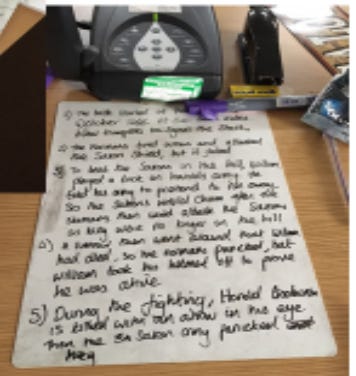
Explain - Think Aloud: Live Modelling
Many students need support in getting started with the tasks we set them - a good way to get them going quicker is by modelling the task for them under the visualiser while ‘thinking aloud’. This process not only shows students what they need to do, but also takes them through the thinking, breaking the tasks into smaller chunks and is an excellent way to adapt your teaching to ensure all students can access the task quickly.
Learn more about the ‘Think Aloud’ approach here:
Reflect - Live Marking
The visualiser can be used to show student work and can an effective tool for involving a whole class in the process of live marking. Pick a piece of work from a student - it is advisable to ensure the student is happy to share their work - and then place it under the visualiser so it can be seen by all on screen. Use questioning to ask the class to reflect on the strengths and areas for improvement. These can be recorded by using the annotation tool on the interactive white board or on the work itself under the visualiser, and can provide an excellent way to set the standards for success, agree success criteria and provide a platform for students to reflect on their own work in comparison.
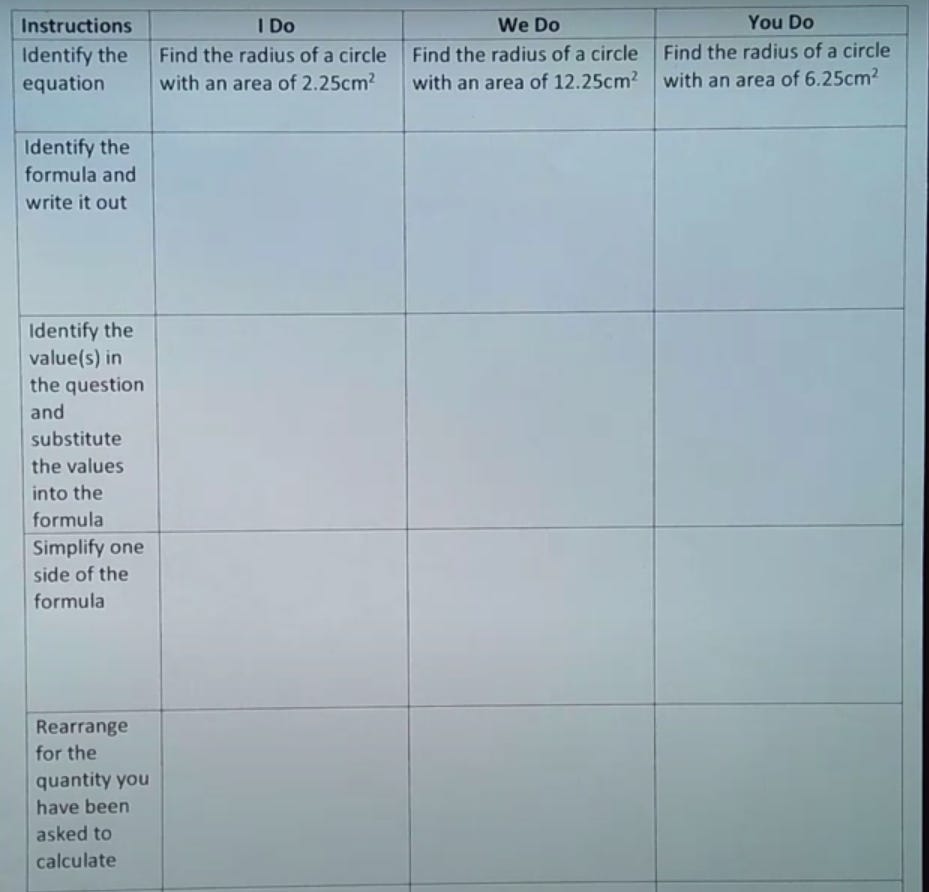
Practice - I do, We do, You do
The gradual release model is well supported by the use of a visualiser as students can all see very clearly what you are doing in the ‘I do’ and ‘we do’ phases before practising on their own. This works especially well if combined with the ‘Think Aloud’ technique outlined above.
Review - Celebrate progress and success
Use the visualiser to celebrate the progress made and successes of students by showing off their work. This can help to build the confidence of students through recognition and also reinforce what First Class work looks like for the whole class.
Teaching Tip - SLANT - Laura Bartoletti
On 18th March, Laura reminded us about the Mothership Routines of SLANT:
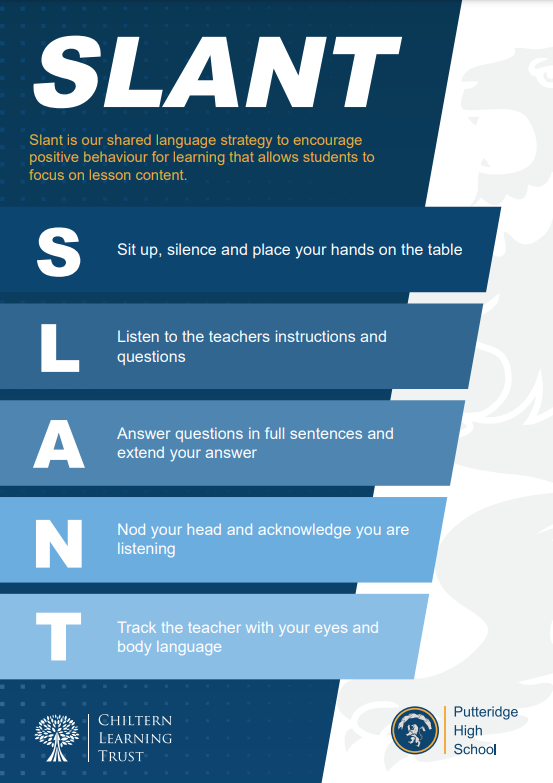
This model for routines and expectations can only work if applied consistently within the classroom, every lesson, by all. Laura’s full presentation can be revisited here.
Upcoming CPD opportunities
Complete Mathematics Research-informed online CPD sessions offer all teachers and school leaders practical suggestions for school improvement.
Upcoming sessions include:
Using formative and summative data effectively - Daisy Christodoulou (30th April - 7pm)
Remembering longer = forgetting more slowly - Paul Kirschner (7th May - 7pm)
All sessions are free and can be accessed here: https://completemaths.com/research-informed-school-improvement
Useful Links for Staff
Development Request Form (CPD)
Low Level Safeguarding Concern Form
Contributing to the T&L Bulletin
We are interested in sharing top teaching tips, resources, book reviews and CPD opportunities. If you would like to contribute to the T&L Bulletin, please email any articles, resources, audio recordings or videos to croom@putteridgehigh.org