
Issue 11: Adaptive Teaching
23rd January 2024

The ‘what’ and the ‘why’
Adaptive Teaching is exactly what you think it is: being responsive to information about learning, then adjusting teaching to better suit student need. This could be on a whole class level, to meet the needs of a group of students within a class or specific to an individual. It is a broad concept, but can be helpful to break the idea down into more concrete recommendations:
Adapting lessons, whilst maintainging high expectations for all, so that all students have the opportunity to meet expectations.
Being responsive to information about learning.
Making effective use of teaching assistants.
These three ideas are all huge concepts in their own right, so it is important that we think about them in isolation in order to committ the necessary time to reflecting on our practice. As a result, the Teaching and Learning Bulletin over the next few months will include special editions examining each, starting in this issue with point 1 - adapting lessons, whilst maintaining high expectations for all, so all students have the opportunity to meet expectations.
The ‘how’ to - ideas from across our school
Approach 1: Learning partners
This idea involves pairing or grouping students for peer support. The approach only works effectively if we have a deep knowledge of your students and a clear understanding of their strengths and weaknesses.
In MFL, Caroline Missonnet uses the process of marking books and homework to build this understanding and then pairs students up to allow those with stronger language skills to support those with weaker language skills. Those with weaker skills can learn from those with stronger skills, who benefit from consolidating their own knowledge through the process of teaching.
Abbie Bright also uses this strategy in Dance when asking students to collaborate. She ensures that the students are clear that both people in partnership need to be able to communicate the understanding to ensure that it is not just the stronger student doing all of the work, thereby ensuring peer support and progression for all.

Approach 2: Breaking down content
Chunking can be used in serveral parts of the signature pedagogy learning cycle - from giving instructions in the explain phase to providing structures for students to chunk their own work in the practice phase.
In the “Explain phase” of his RE lessons, Sonny Foulkes adapts by providing a breakdown of instructions on a mini-whiteboard for students who need it, allowing those to complete the same task as everyone else but in smaller chunks. This simple adaptation means all students can work towards the same high level objective.
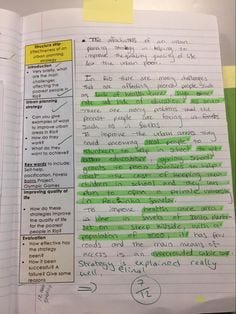
In Geography, Ellie Doult frequently uses structure strips down the side of the page during the “Practice phase” of the lesson. These provide students with the different aspects needed to write a high level answer, but one chunk at a time. The support provided on a structure strip can be simple or detailed, and can also be adapted over time in response to student’s gaining understanding and confidence with the writing structures.
Approach 3: Dual Coding
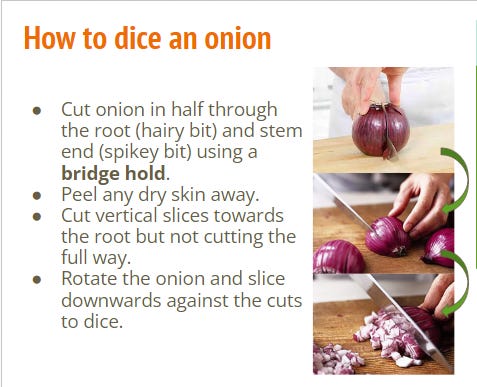
Dual coding is the process of providing students with written or verbal information and visual materials at the same time. Adding visuals to written or verbal information can help students to build understanding more quickly as it can make the ideas more concrete. It also provides students with different ways to understand the material presented.
In Food Technology, Kathryn Scales adds photographs into the recipe instructions to help students to visualise what they need to do at each stage of the process. This allows students who struggle with understanding written instructions to access the instructions more independently.
If you are interested in seeing adaptive teaching in practice around our school, Putteridge staff can book time with a member of leadership. You will walk the school and pop into lessons before having the opportunity for an informal conversation about what adaptive teaching practices you have seen (and how that could be used in your own subject areas/classrooms). If you would like to take up this opportunity, please complete the Google Form here: Welcome In Request Form
CPD
We are proud to share the updated CPD Catalogue from the CTSH. There are over 200 free videos, covering a range of subjects; phases; school improvement areas and technology for learning; and including this video from Flora Burt on adaptive teaching:
View the entire catalogue here: https://youtube.com/@ChilternTeachingSchoolHub?si=aCXorIvf5eUrTQGO
All the sessions from the Subject Knowledge Expert Conferences in January can be found here. This includes a Science session on using AI to support SEND and a session on Adaptive Teaching in Food as well as all other presentations from the day.
Useful Links for Staff
Development Request Form (CPD)
Low Level Safeguarding Concern Form
Contributing to the T&L Bulletin
We are interested in sharing top teaching tips, resources, book reviews and CPD opportunities. If you would like to contribute to the T&L Bulletin, please email any articles, resources, audio recordings or videos to croom@putteridgehigh.org